
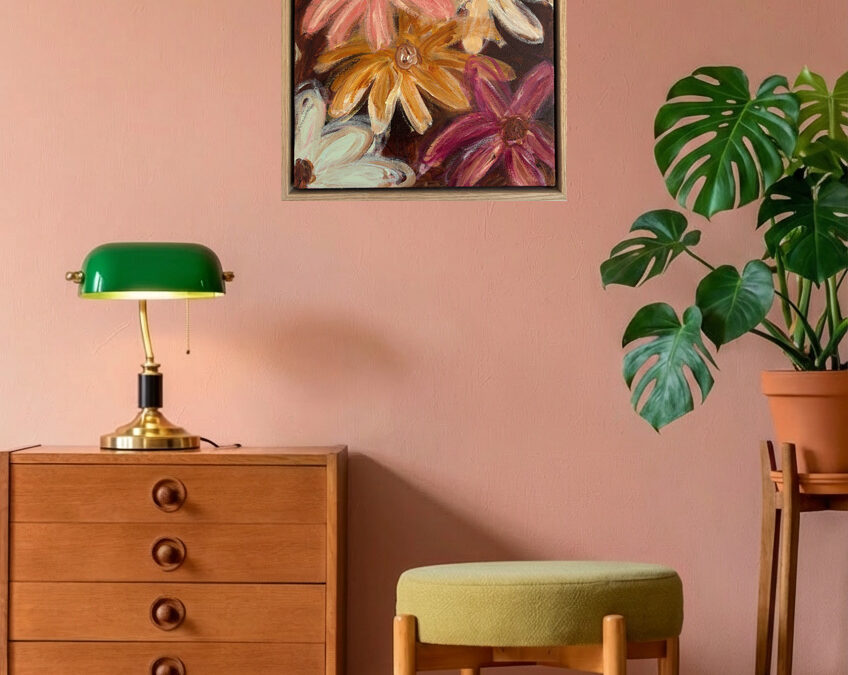
As an artist, it is my passion to see personality introduced back into homes through the use of intentional and timeless pieces.
Mid-century modern homes are loved for their clean lines, warm timber tones, and effortless sense of calm. But somewhere along the way, many of these spaces lose their personality.
They become beautiful… but a little quiet.
Styled… but slightly soulless.
The good news? You don’t need to clutter your home or abandon mid-century principles to bring personality back in. You just need to be intentional.
Why Mid-Century Homes Sometimes Feel “Too Safe”
Mid-century modern design values simplicity, proportion, and function. When taken too literally, this can lead to:
-
Neutral-on-neutral palettes
-
Perfectly matched pieces
-
Spaces that feel styled for photos, not for living
The original mid-century homes, however, were anything but sterile. They were bold, expressive, and deeply personal.
Personality Comes From Contrast
One of the easiest ways to add personality while keeping clean lines is through contrast — especially with art.
Artwork allows you to:
-
Introduce emotion without visual clutter
-
Add warmth to minimal spaces
-
Break symmetry in a considered way
-
Tell a story that furniture alone can’t
In a mid-century home, art doesn’t need to shout — but it should say something.
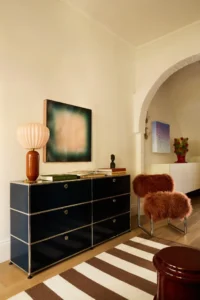
(Photography: Traianos Pakioufakis | Story: Belle)
Let the Art Do the Talking
Instead of layering objects on every surface, choose one or two artworks that anchor the room.
Look for pieces that:
-
Have depth and texture
-
Feel expressive rather than decorative
-
Introduce colour in an intentional way
-
Complement the warmth of timber and natural materials
Original artwork works especially well here — it adds soul without adding noise.
Less Pieces, More Meaning
A single artwork with personality will always feel more powerful than a gallery wall chosen to “match the room.”
Mid-century modern homes shine when they feel edited, not empty.
If you’re craving a space that feels calm and lived-in, start with the walls. Personality doesn’t come from adding more — it comes from choosing better.